Prepare Your House Before Winter
Every October the same conversation happens in millions of homes. The heating comes on, the first bill arrives in November, and everybody is surprised. Nothing broke. Nothing was renovated. The house simply did what it always does, and this year the numbers are less forgiving.
The useful way to think about winter preparation is not as a list of chores. It is as a heat balance. A building loses energy through a small number of paths, and every path has a price per watt. Once you know where the watts go, the shopping list writes itself.
Where the heat actually goes
A typical detached house of 120 square metres, reasonably maintained but never deeply upgraded, loses roughly 6 to 7 kW on a cold day. Spread over a season that becomes tens of thousands of kilowatt hours of heat, and at current prices that is the single largest controllable cost in the household budget.
The split is surprisingly stable across countries and construction styles.
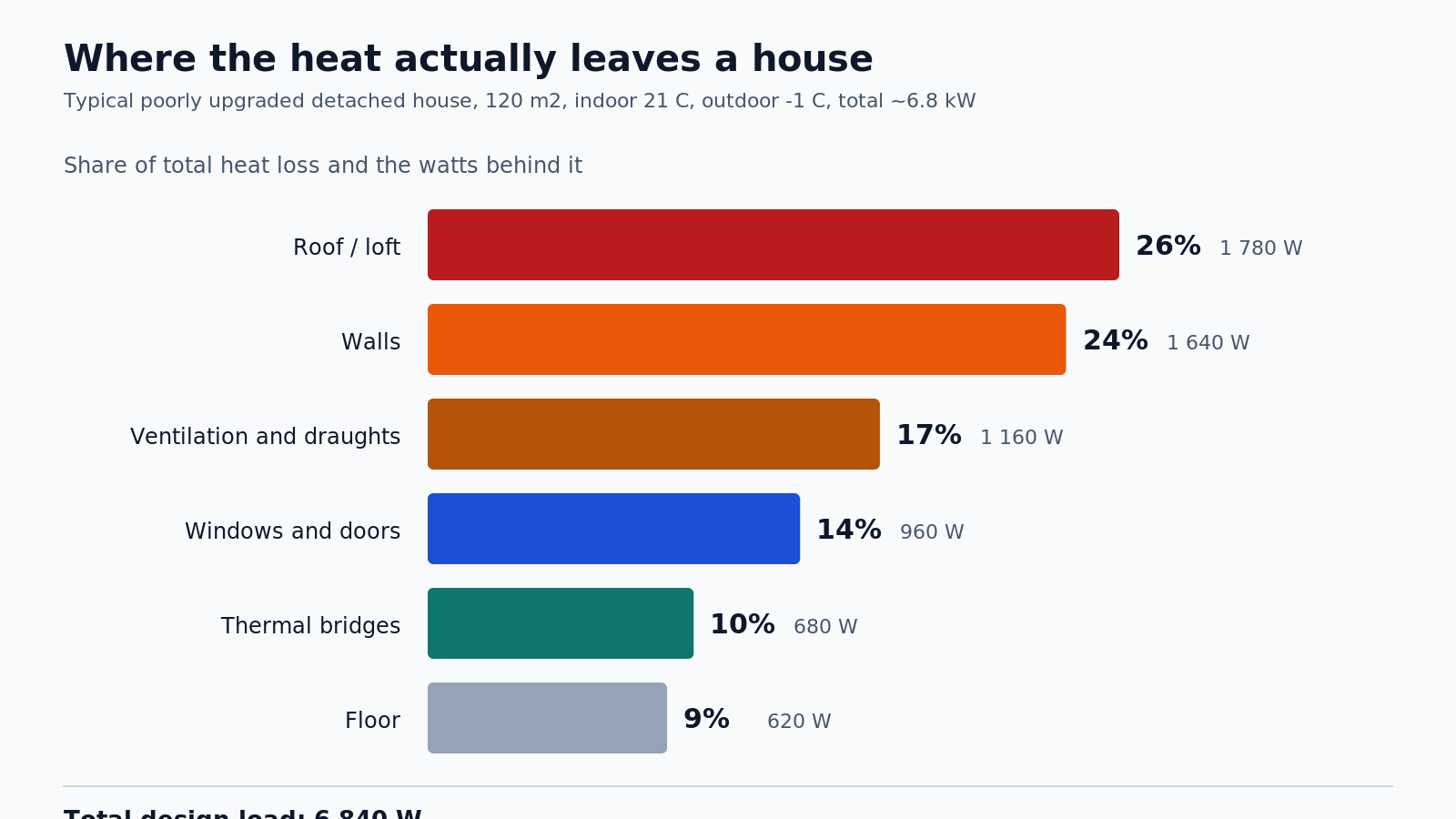
Figure 1: Heat loss share for a typical house before a deep retrofit. Roof and walls dominate in absolute terms, but windows and thermal bridges lose far more per square metre.
Roughly a quarter leaves through the roof, another quarter through the walls. Ventilation and uncontrolled draughts account for something close to a fifth. Windows and doors, despite being a small fraction of the envelope area, take another 14 percent. Thermal bridges, the junctions where geometry defeats insulation, take about a tenth and almost never appear in a homeowner's mental model of the house.
Two conclusions follow immediately. First, the roof is usually the cheapest large area to fix, because access is easy and the work is simple. Second, the parts you cannot see are the parts worth measuring. That is where a thermal imaging camera earns its place in the toolkit.
The equation behind every bill
Heat transfer through a building element is not mysterious. It follows one line of arithmetic.
Q = U x A x Delta T
Q is the heat flow in watts. U is the thermal transmittance of the assembly in watts per square metre per kelvin. A is the area. Delta T is the temperature difference between inside and outside. That is the whole model, and it explains almost every surprise in a winter bill.
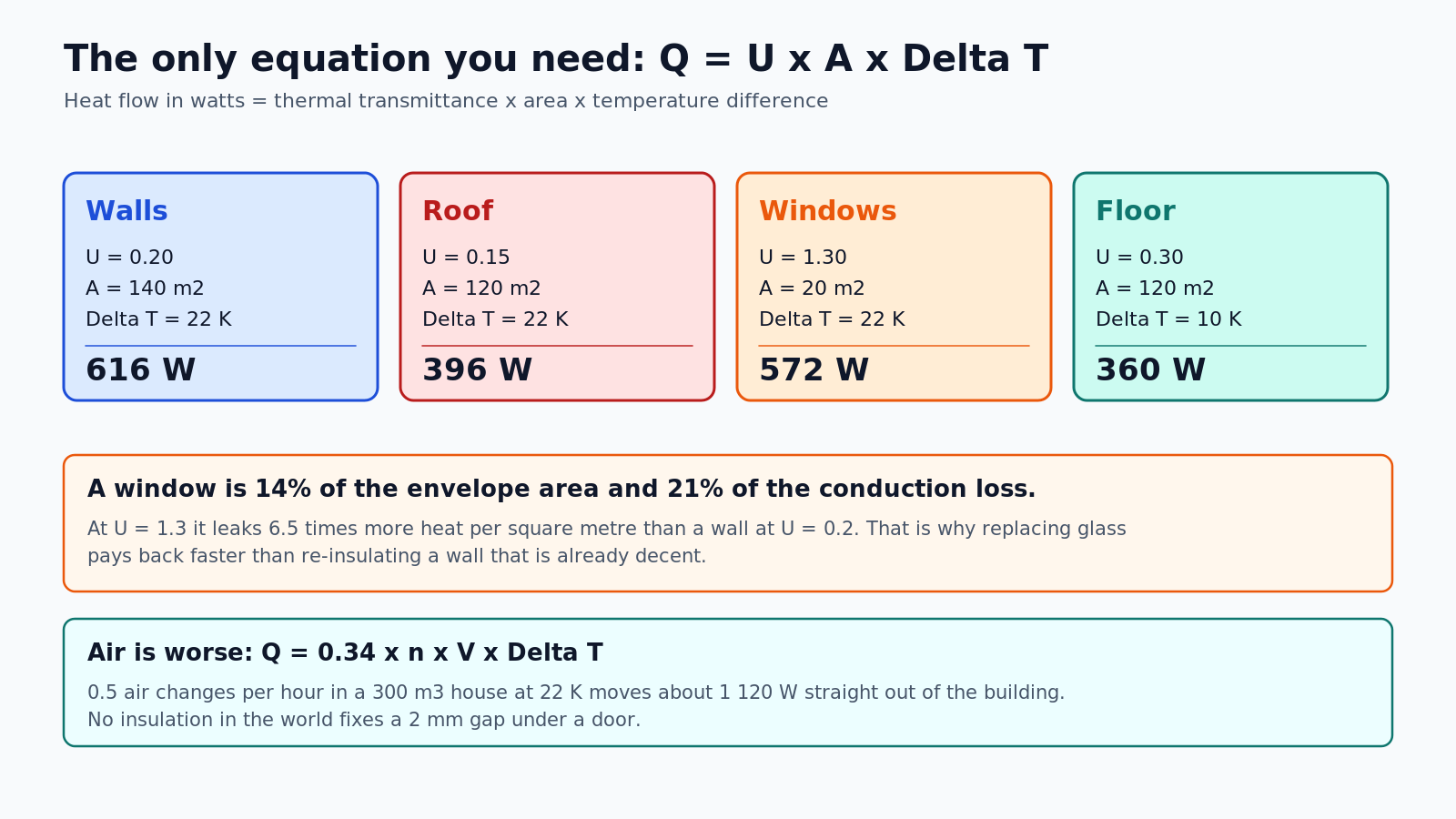
Figure 2: The same equation applied to each element of a reasonably upgraded house. Windows punch far above their area.
A wall with U = 0.20 and 140 square metres of area loses 616 W at a 22 K difference. A roof at U = 0.15 loses 396 W. Twenty square metres of windows at U = 1.30 lose 572 W, which is more than the entire wall. Per square metre, the window is leaking 6.5 times faster than the wall next to it.
That single ratio explains why window replacement often pays back faster than adding another 50 millimetres of insulation to a wall that is already decent. It also explains why a cheap window with an excellent U-value can still feel cold: the number describes the centre of the glass, not the frame and not the installation.
Air is worse than any solid material. The infiltration term is:
Q = 0.34 x n x V x Delta T
where n is air changes per hour and V is the internal volume. Half an air change per hour in a 300 cubic metre house at 22 K moves about 1 120 W straight outside. No amount of mineral wool fixes a two millimetre gap under a door. Sealing is almost always the first move, and it is almost always the cheapest.
Thermal bridges, the invisible leaks
A thermal bridge is a place where heat finds a shortcut. It happens whenever a material with high conductivity, or a geometry with more exterior surface than interior surface, penetrates the insulation layer. Concrete balcony slabs, steel lintels, window reveals, wall corners, the junction between wall and floor.
In a real house it is visible before any instrument is unpacked. This is what a window reveal looks like through a thermal camera on a cold morning.
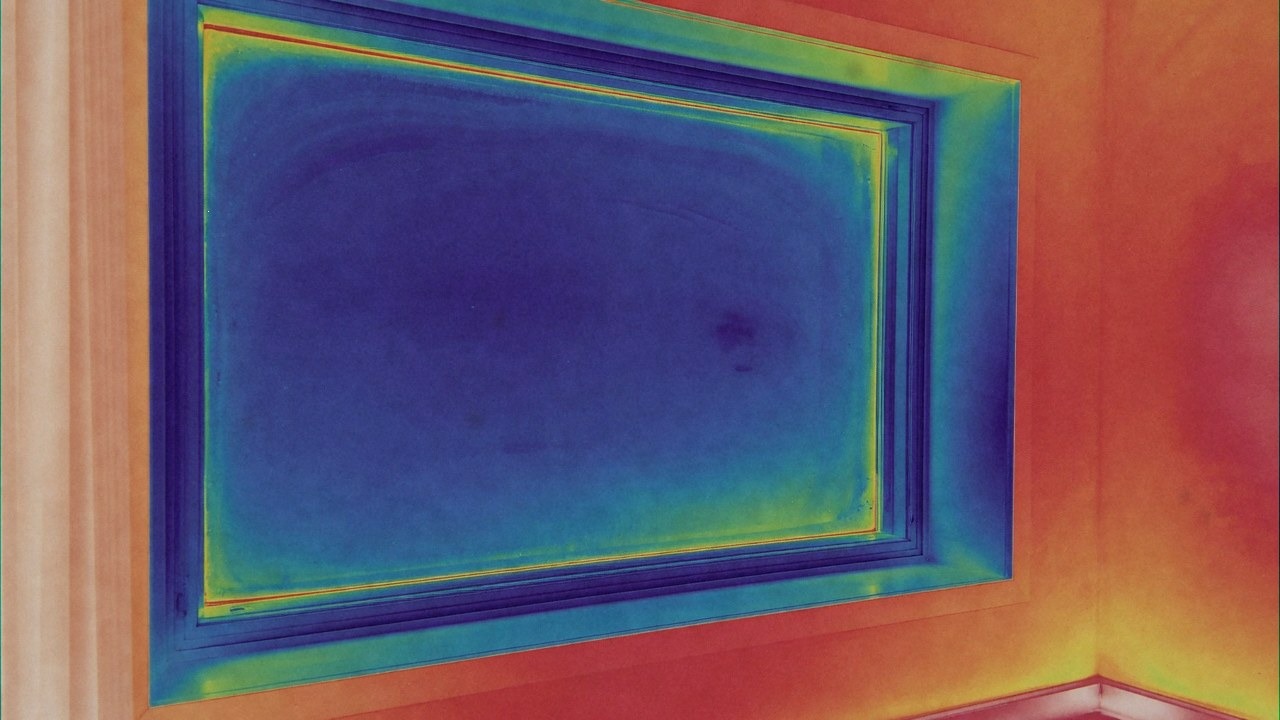
Figure 3: A thermal camera sees the frame and the reveal, not the glass. The blue bands are the cold path around the opening.
The physics is visible in a section drawing too.
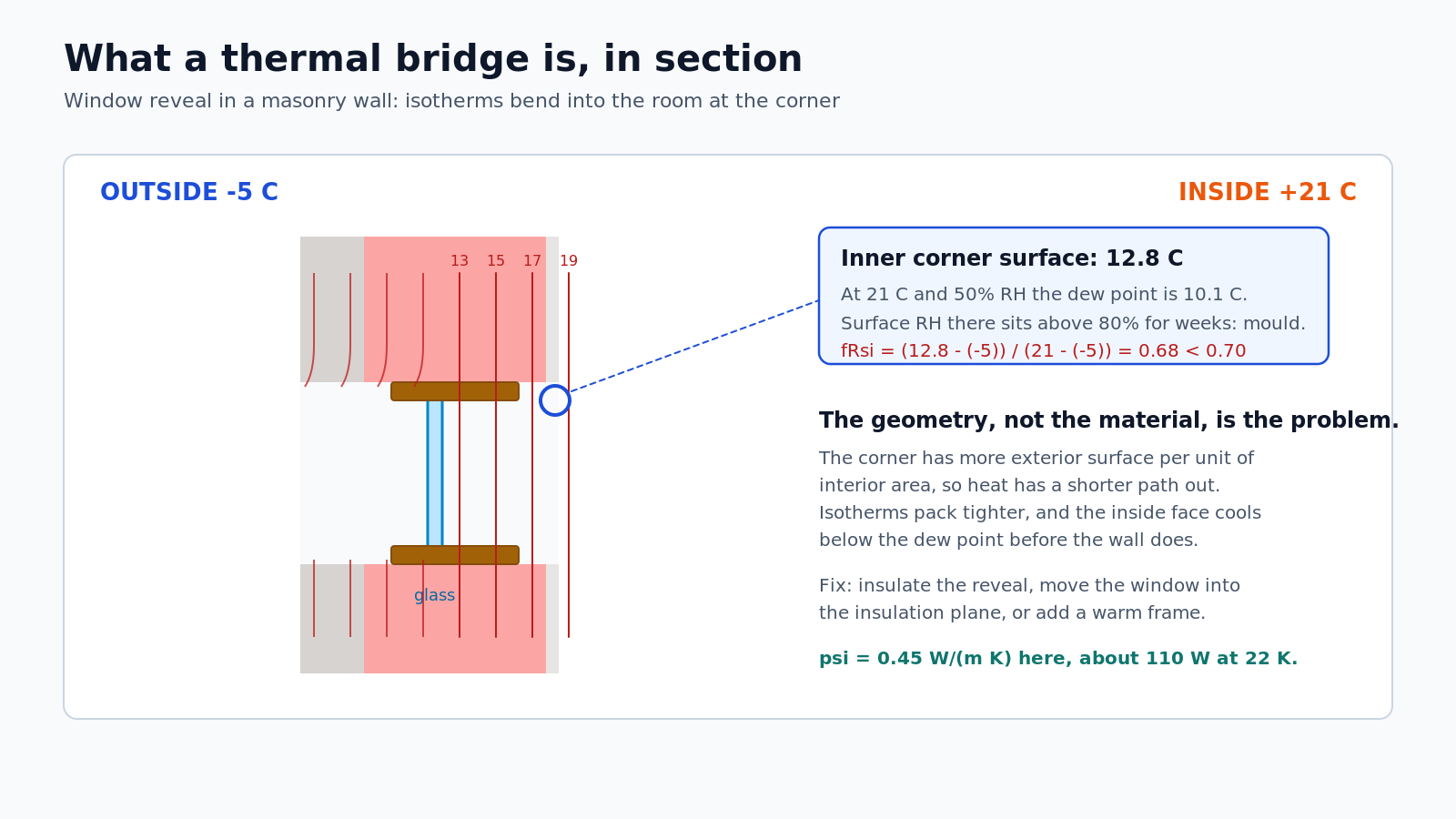
Figure 4: Isotherms bend into the room at the window reveal. The inner corner drops below the dew point long before the wall does.
Look at the corner where the wall meets the window reveal. The exterior surface there is larger than the interior surface, so the heat path is shorter and the temperature gradient is steeper. The isotherms, the lines of equal temperature, bend inward. The inner face of the corner ends up at around 12.8 C while the room air sits at 21 C.
At 21 C and 50 percent relative humidity, the dew point is about 10.1 C. The corner stays above that, but only just, and its surface humidity sits above 80 percent for weeks. That is the conditions mould needs. The standard measure of this risk is the temperature factor fRsi, defined as the surface temperature minus outdoor temperature, divided by indoor minus outdoor. Below 0.70, mould is considered likely. This corner measures 0.68.
This is why thermal bridges matter out of proportion to the watts they carry. A linear thermal transmittance of 0.45 W per metre per kelvin across eleven metres of junction is roughly 110 W at a 22 K difference, about 1.5 percent of the total load. Real money, but not catastrophic. The mould, the stained plaster and the cold corner that makes a room unusable are the real cost.
Fixing it is rarely exotic. Insulate the reveal, move the window frame into the insulation plane, use a warm frame with a thermal break, or add external insulation that wraps the junction continuously. In older masonry houses, even a 30 millimetre insulation return around the reveal makes a measurable difference.
Reading a thermal camera properly
A thermal imaging camera does not see heat. It sees infrared radiation in the 8 to 14 micrometre band and converts it to a surface temperature map using an assumed emissivity. That distinction matters, because most bad thermal surveys are bad for one of three reasons: wrong emissivity, wrong timing, or reflections.
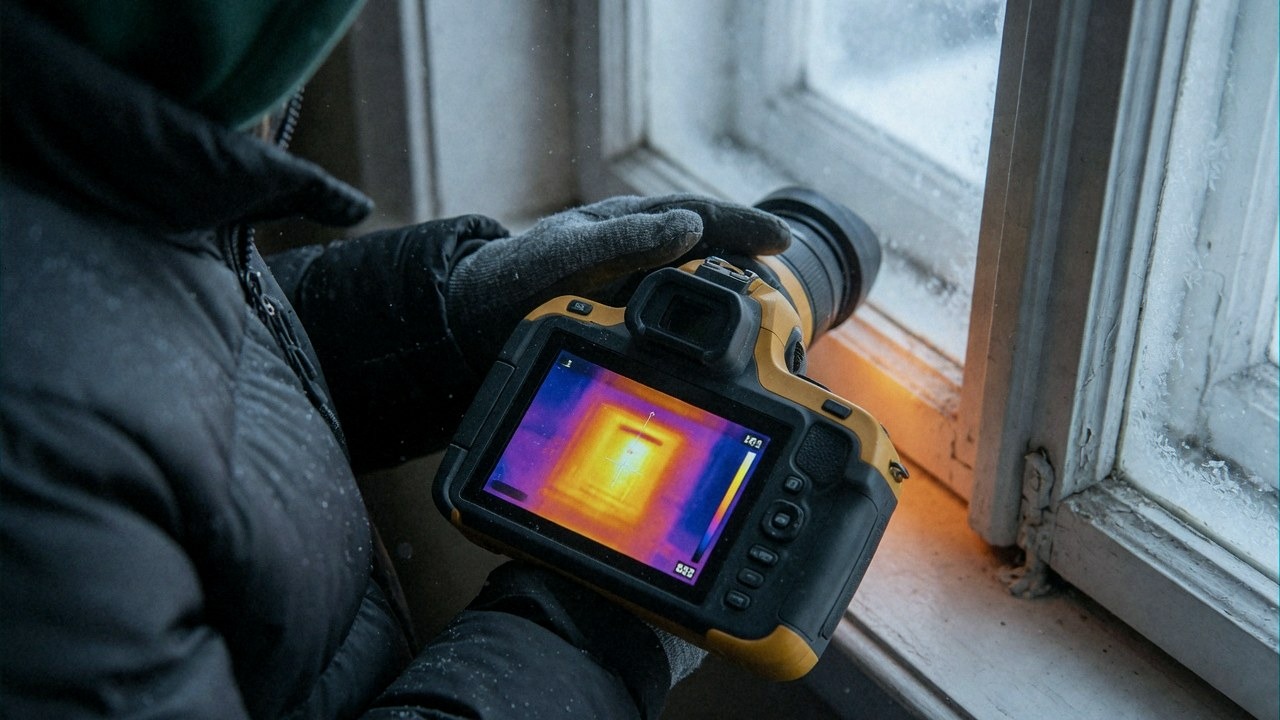
Figure 5: A 256 by 192 pixel sensor with a noise equivalent temperature difference under 50 mK is enough for a house survey.
What to look for in the specification. A microbolometer with 256 by 192 pixels is the practical minimum for building work. Thermal sensitivity, quoted as NETD, should be 50 mK or better. Accuracy of plus or minus 2 C or 2 percent is normal. A fixed-focus lens is fine indoors; a manual focus ring is worth the extra money if you plan to scan façades from outside. Decent handheld units now start around 200 to 300 dollars, and phone attachments sit in a similar range with worse ergonomics. Renting one for a weekend costs less than a single mis-bought insulation job.
Emissivity is the trap. Plaster, brick, wood and painted surfaces sit around 0.90 to 0.95, which is why most cameras default to 0.95 and are roughly right. Bare shiny metal sits near 0.05 and will read as freezing cold even when it is warm, because it is a mirror. Glass is around 0.92 but it is also reflective in the infrared, so an indoor scan of a window shows you the reflection of the room, not the glass temperature. Put a piece of matte tape on the frame and measure the tape.
Timing is the second trap. A thermal camera needs a temperature difference to see anything. Ten kelvin is the minimum for a useful interior survey, fifteen is comfortable. That means scanning during the heating season, with the heating running steadily for at least three hours, ideally early morning before sun hits the façade. Exterior surveys want a cold, overcast morning after a warm night, when the building's stored heat is escaping. Scanning a sunlit wall in the afternoon tells you about the sun.
Reflections are the third. At night, standing inside a warm room, every shiny surface reflects you. Step to the side, angle the camera, and compare the same detail from two positions. If a cold patch moves when you move, it is a reflection, not a defect.
What you are hunting for is a pattern. Cold bands along a window frame mean a failed gasket or a badly seated frame. A cold strip at the wall to floor junction means a missing insulation return. A cold rectangle in the ceiling means a gap in the loft roll. A cold streak under a door means air, not conduction, and that is the cheapest thing on the list to fix.
One honest caveat: a thermal camera shows surface temperature, not airtightness. Air leaks show up as cold streaks and uneven patterns, but proving infiltration requires a blower door test at 50 pascals. If you are planning serious work, do both, and do them before the work starts so you have a baseline.
Nine jobs before the first frost
Work from cheapest to most expensive, and stop when the remaining items no longer pay for themselves.
- Walk the house with a candle or a thermal camera on a windy day. Note every cold streak. This is your map.
- Replace worn window and door gaskets, adjust the hinges and the locking cams so the sash pulls evenly against the seal. A five dollar gasket beats a new window.
- Seal penetrations: pipes, cables, the loft hatch perimeter, letterboxes, and the gap behind skirting boards on external walls.
- Fit a chimney balloon if the fireplace is unused. An open flue is a permanent hole in the thermal envelope.
- Bleed every radiator, then balance the system so the furthest rooms heat at the same rate as the nearest. Unbalanced systems waste 5 to 10 percent before anything else is wrong.
- Set a schedule instead of a constant temperature. 20 C when occupied, 17 to 18 C at night and when away. A smart thermostat pays back in one or two seasons, but a plain programmable one does the same job for less.
- Keep relative humidity between 40 and 50 percent. Below 40 feels cold and dries the air; above 60 feeds mould on the coldest surfaces. A ten dollar hygrometer tells you more than any app.
- Lag the hot water cylinder, the first two metres of every hot pipe, and the loft tank if you have one.
- Before the first hard frost, disconnect garden hoses, shut off and drain outside taps, clean gutters, and check that the condensate pipe from the boiler does not run outside unprotected.
Two more items belong on the list if the budget allows. Top up loft insulation to 400 millimetres, and fix the thermal bridges around windows and doors rather than replacing the windows themselves. Both are unglamorous and both work.
What each job buys you
Payback is the only honest comparison, and it changes the order of the list.
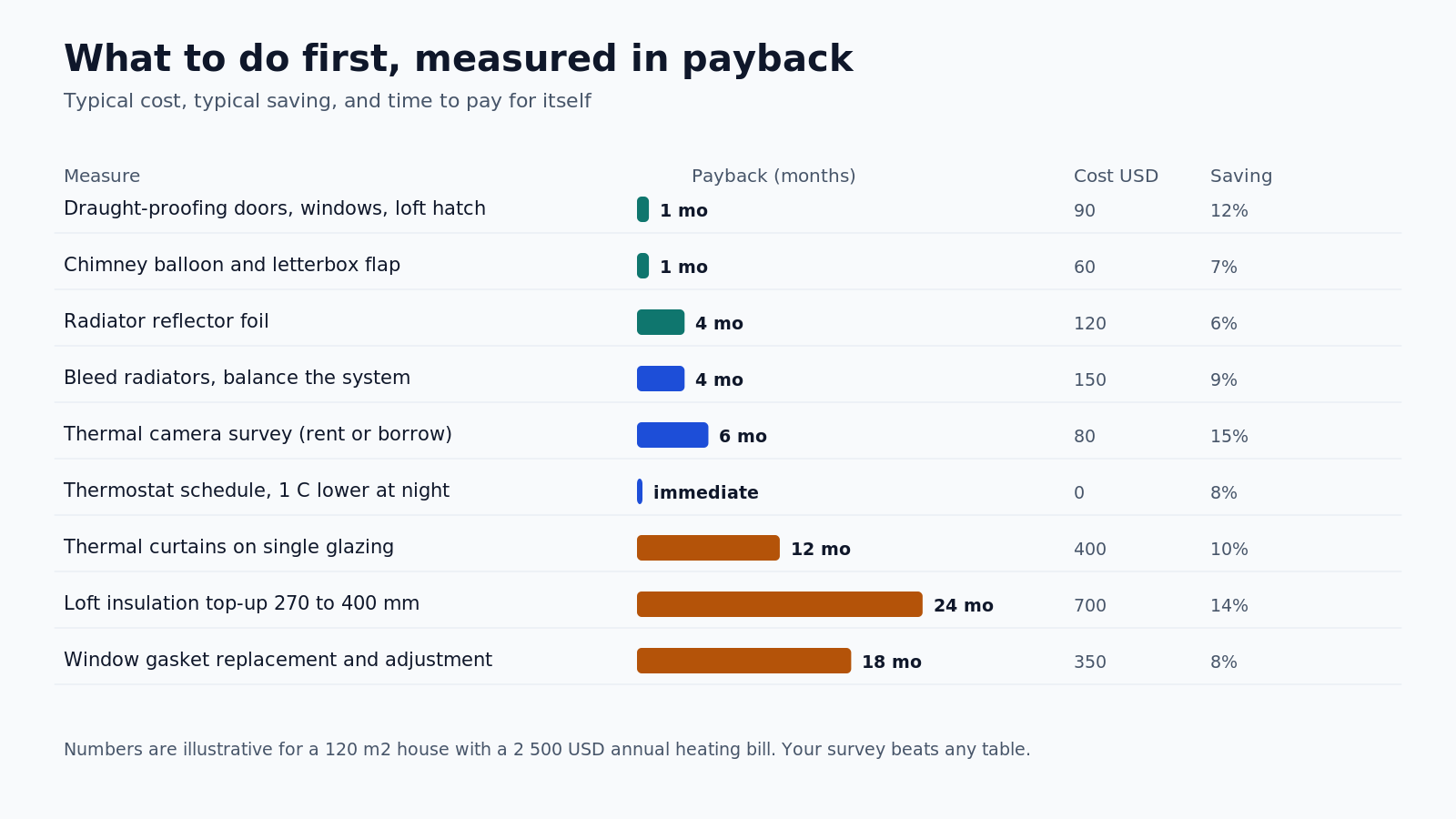
Figure 6: Typical cost, saving and payback for common measures. Draught-proofing wins almost every time, because it is nearly free.
The pattern is consistent. Anything that stops air movement pays back within a season or two. Anything that adds material to a surface pays back over years. Anything that replaces a component pays back over a decade and should be justified by comfort or by a simultaneous renovation, not by the energy bill alone.
The thermal camera sits in an odd category. It is a diagnostic tool, not a measure. Its payback comes from what it prevents: the loft insulation that was laid with a two metre gap at the eaves, the radiator that was never connected, the cold corner that would have become a mould problem in February. Borrow or rent one before spending four figures on a guess.
The one-degree argument
Most of the savings in a winter bill are not technical. They are behavioural, and they are invisible because nobody sees the setpoint as a decision.
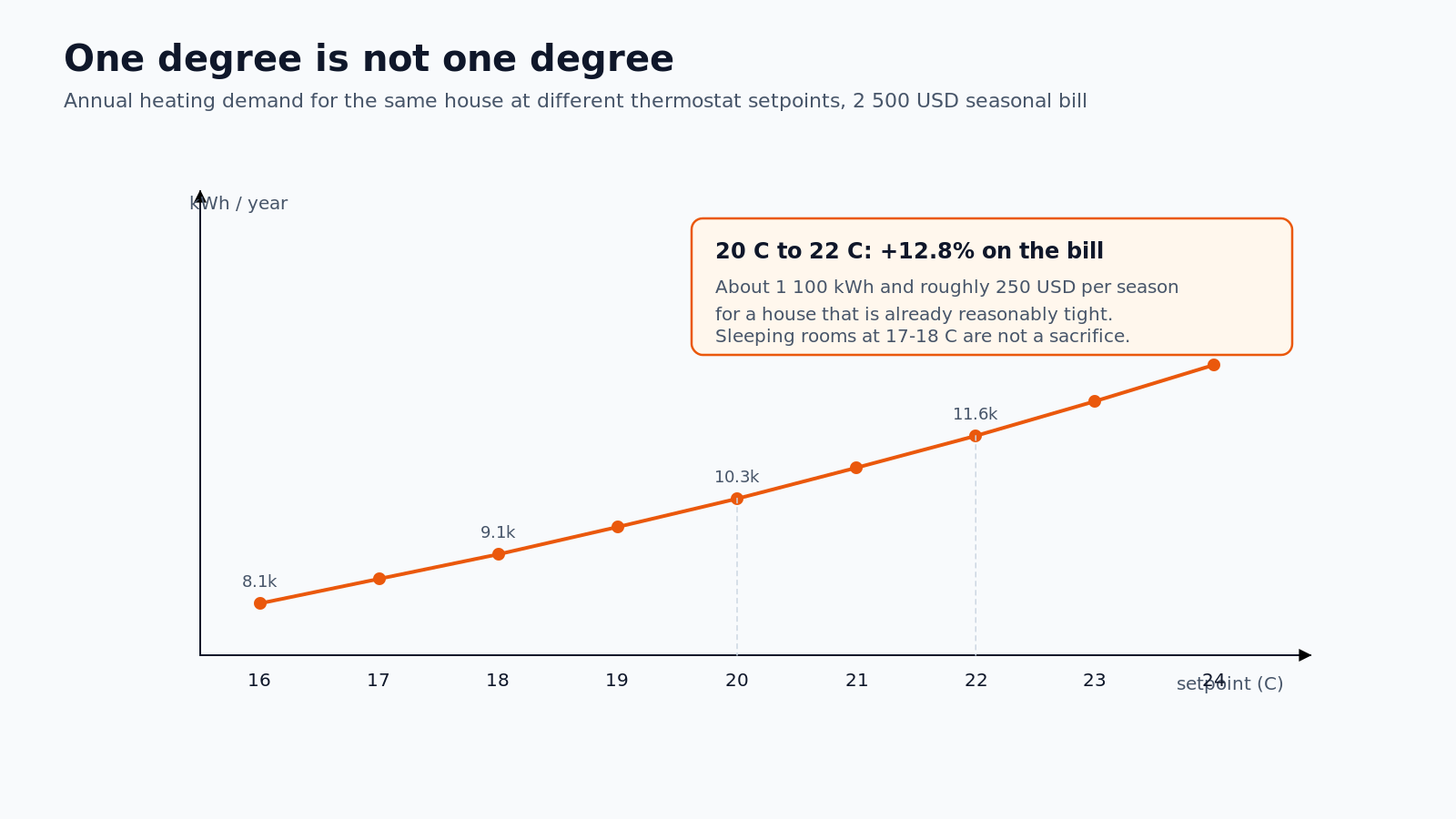
Figure 7: Annual heating demand for the same house at different setpoints. Each degree is roughly 6 percent of the bill.
Every degree of indoor temperature costs roughly 5 to 6 percent of heating energy in a typical house. Moving from 22 C to 20 C in a 120 square metre home saves over a thousand kilowatt hours a season, which at current prices is several hundred dollars. Dropping to 17 C at night and back to 20 C in the morning saves more, provided the recovery is not attempted with a cold-start boiler running flat out for two hours.
The comfort argument against this is weaker than it sounds. Most people cannot tell 20 C from 22 C in a room with a warm floor and no draughts. They can tell a cold corner from a warm one from across the room. Fix the envelope, then lower the setpoint, and the house feels better at a temperature that used to feel cold.
A weekend plan
Saturday morning, before the heating has been running long, walk the house with the camera and write down every anomaly. Saturday afternoon, seal and adjust everything that can be sealed and adjusted with a roll of gasket and a tube of acrylic. Sunday morning, bleed and balance the radiators, set the thermostat schedule, and put a hygrometer in the coldest room.
That is the whole job. It costs less than a mid-range appliance and it changes the next five winters. The house does not need to be rebuilt. It needs its heat paths understood, its geometry corrected where it matters, and its setpoint treated as a number rather than a mood.
Winter is not an emergency. It is a schedule, and it starts about six weeks before the first frost.










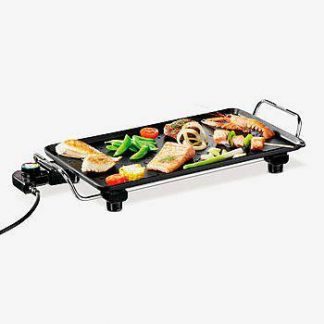




I love how this grill heats fast and cooks even. Princess finally made one that doesn't whinge.
Evangeline, this is the question of the year, and I want to give you full credit for asking it because…
Alejandro, I’d gladly challenge the author’s “more programmes = better bread” fairy tale, but your own argument is a bit…
Meaco AirVax smart, bread maker consistent, but 37 programmes is spec-sheet padding, not baking.
In insurance, fresh bread smells like claims: scorched appliances and smoke alarms. If you must bake, use Meaco AirVax for…