
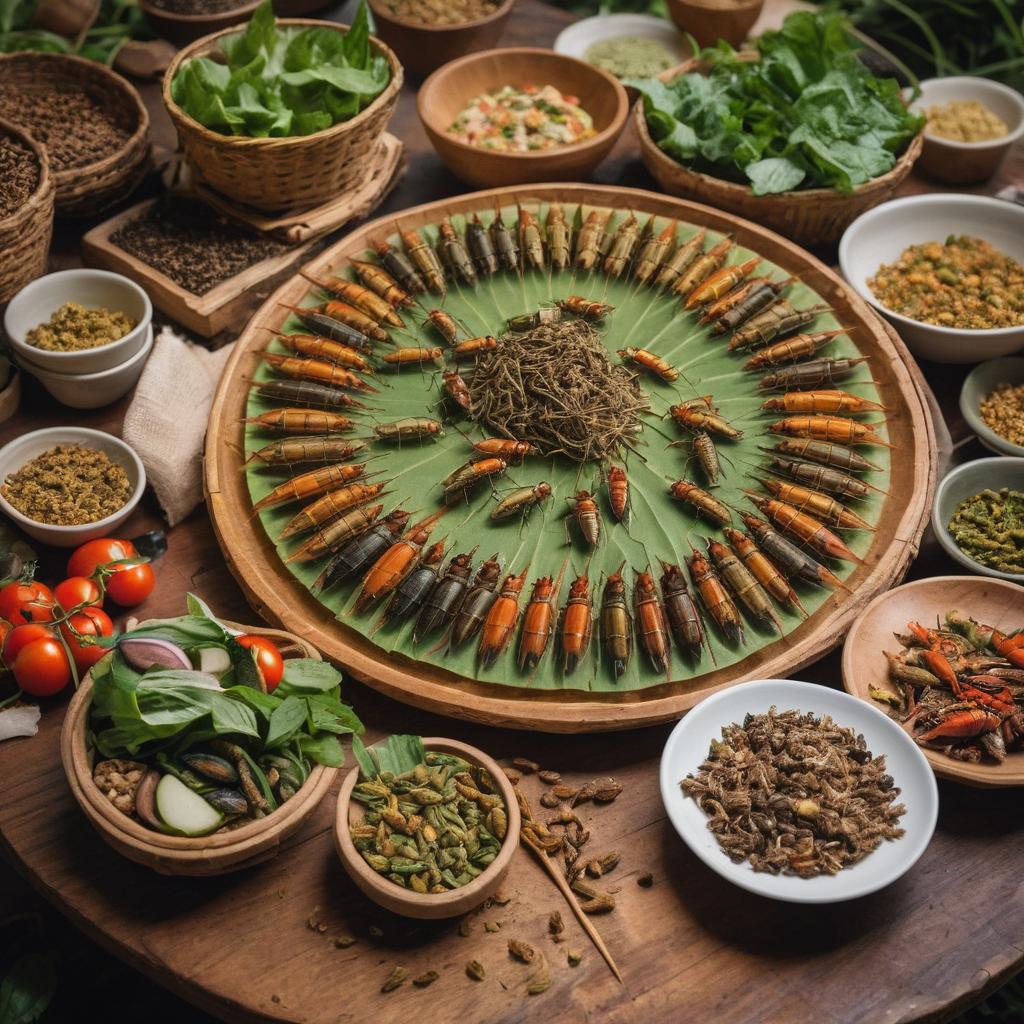
The Bug-Eating Challenge: Can Insects Become the Next Food Frontier?
In a world where sustainability and food security are increasingly pressing concerns, the humble insect is being touted as a potential game-changer. From cricket-laced laksa to grasshopper salads, chefs and researchers around the globe are exploring the culinary potential of entomophagy – the practice of eating insects.
The idea may seem repulsive at first, but proponents argue that it’s not just about sustainability – rearing insects requires less water and land than livestock – but also making them taste good. And with a growing interest in exotic and unusual foods, the time is ripe for insects to take center stage.
At the forefront of this movement are chefs like Joseph Yoon and Nicholas Low, who are pioneering the edible insects trend. Yoon, based in New York, designed a menu for the “Insects to Feed the World” conference that featured cricket-laced dishes like laksa (a coconut noodle broth) and chili crickets. The idea is not just about sustainability – rearing insects requires less water and land than livestock – but also making them taste good.
Low, from Singapore, took a more innovative approach by using minced cricket in place of fish cake in the popular dish. He said it was essential to mask the earthy smell of the insects, which can be off-putting. “We have to focus on making them delicious,” he emphasized.
But is this enough to convert people into bug-eaters? The United Nations estimates that over two billion people worldwide already consume insects as part of their diet, but many are hesitant to join them. Low believes the key lies in experimentation with strong flavors, like laksa, which can distract from the insect texture.
Restaurants have been experimenting with edible insects, and some have even incorporated them into mainstream menus. The Tokyo-based Takeo Cafe has been serving customers insects for over a decade, including salad dishes featuring grasshoppers and cockroaches.
While there are those who dismiss edible insects as a novelty or an exotic concept, others believe it’s just a matter of time before they become mainstream. “Foods once seen as ‘exotic’ can gradually become popular,” said Keri Matiwck, a food researcher from Singapore’s Nanyang Technological University.
However, changing cultural beliefs about insects takes time. Many people still view them as “disgusting and dirty.” To combat this stigma, advocates suggest raising children to be more tolerant of unusual foods, including insects, which may become the “superfoods” of the future.
As for now, Singapore chef Nicholas Low is skeptical that people will change their diets anytime soon. Younger consumers might try insects out of curiosity, but the novelty will eventually wear off. For now, the bug-eating challenge remains a culinary and cultural one.
But what if this trend were to take off? What would be the implications for our food system, our environment, and our society as a whole? Would we see a shift towards more sustainable and environmentally-friendly agriculture, or would it just become another fad?
Some experts argue that edible insects could provide a much-needed solution to the world’s growing hunger crisis. With the global population projected to reach 9.7 billion by 2050, finding new sources of protein is essential. Insects offer a viable alternative to traditional livestock, requiring less water and land to produce the same amount of protein.
But it’s not just about sustainability – edible insects could also have a significant impact on our environment. Animal agriculture is responsible for around 14.5% of global greenhouse gas emissions, while insect farming produces virtually no emissions at all.
Of course, there are still many challenges to be overcome before edible insects become a mainstream food source. But with the culinary world already embracing this trend, it’s not hard to imagine a future where insects are a staple in our diets – and not just for their environmental benefits, but also because they’re delicious.
In that future, we might see insect-based meat alternatives dominating restaurant menus, or even entire industries springing up around insect farming. We might see companies marketing insect-based protein powders and supplements to health-conscious consumers, or insect-infused energy bars for athletes on-the-go.
Or we might see none of this at all – and the bug-eating challenge will remain just that: a culinary novelty with no real practical application. But one thing is certain: if edible insects are going to become a mainstream food source, it’s going to take more than just a few adventurous chefs and researchers to make it happen.
It’ll require a cultural shift, a change in attitudes towards what we consider “food” and “edible.” It’ll require education and awareness-raising campaigns to convince people that insects are not only safe to eat but also nutritious. And it’ll require infrastructure – from insect farms to processing facilities, distribution networks and retail stores.
In short, it’ll take a concerted effort from governments, industry leaders, researchers, chefs, and consumers alike to make edible insects a reality. But if we’re willing to put in the work, who knows? Insects might just become the next big thing in food – and not just for their environmental benefits, but also because they taste great.
The Rise of the Insect-Based Food Industry
If edible insects are going to become mainstream, it’ll require a whole new infrastructure around insect farming, processing, and distribution. This could involve everything from large-scale farms producing millions of insects per year, to small-scale operations harvesting wild insects for sale to restaurants and consumers.
In this future, we might see companies like cricket farms or mealworm processors dominating the industry, with entire supply chains dedicated to delivering insect-based protein products to markets around the world. We might see entrepreneurs developing innovative insect-based food products – from insect-based milk alternatives to insect-based energy bars.
And we’ll see governments investing in research and development initiatives to support the growth of this industry. They’ll provide funding for pilot projects, set regulations for insect farming and processing, and provide incentives for companies looking to invest in this emerging sector.
Of course, there are many challenges that will need to be overcome before edible insects become a mainstream food source. But with the culinary world already embracing this trend, it’s not hard to imagine a future where insects are a staple in our diets – and not just for their environmental benefits, but also because they’re delicious.
The Future of Food: A World Where Insects Rule
In this future, we’ll see insect-based food products dominating restaurant menus around the world. We’ll see companies like cricket farms or mealworm processors producing millions of insects per year, with entire supply chains dedicated to delivering insect-based protein products to markets around the world.
We might see a shift towards more sustainable and environmentally-friendly agriculture, as farmers turn to insect farming as a viable alternative to traditional livestock. And we might even see entire industries springing up around insect-based food products – from insect-based milk alternatives to insect-based energy bars.
Or we might see none of this at all – and the bug-eating challenge will remain just that: a culinary novelty with no real practical application. But one thing is certain: if edible insects are going to become a mainstream food source, it’ll require a cultural shift, a change in attitudes towards what we consider “food” and “edible.”

















Great article on the potential of entomophagy (insect-based foods) to become a mainstream food source! As tensions rise in the Middle East, it’s interesting to note that insects could play a crucial role in addressing global hunger and sustainability concerns. Can you imagine a future where insect-based meat alternatives dominate restaurant menus? The possibilities are endless.
While the idea of eating insects may seem like a novelty to some, I believe it has the potential to become a game-changer in addressing food security and sustainability issues. With Thames Water’s financial struggles being a stark reminder of the fragility of our food system, innovative solutions like insect farming could provide a much-needed lifeline.
Can insects become the next food frontier?
What an intriguing article! It’s fascinating to think about the potential of edible insects as a sustainable food source. I completely agree with the author that it’s not just about sustainability, but also about making insects taste good. I’m curious to know: Can you imagine a future where insect-based meat alternatives are mainstream, and how would this impact our food system and environment?
have we considered the long-term consequences of integrating insects into our diets on a large scale? While proponents argue that insect farming requires less water and land than traditional livestock, don’t we risk creating a new monoculture, dependent on a single protein source, which could lead to unforeseen environmental problems?